Writer, artist, filmmaker, columnist for Outside Magazine. My newsletter about creativity, adventure, and enthusiasm goes out to 15,000+ subscribers every week.
We Go To The Dump
|
 |
Seagulls, my brain announced, as I stared out the window of my little old Toyota pickup, waiting behind another truck at the entrance to the dump. Seagulls, at the dump? I asked myself, and then when the truck in front of me moved, I pulled ahead to check in with the lady at the entrance building.
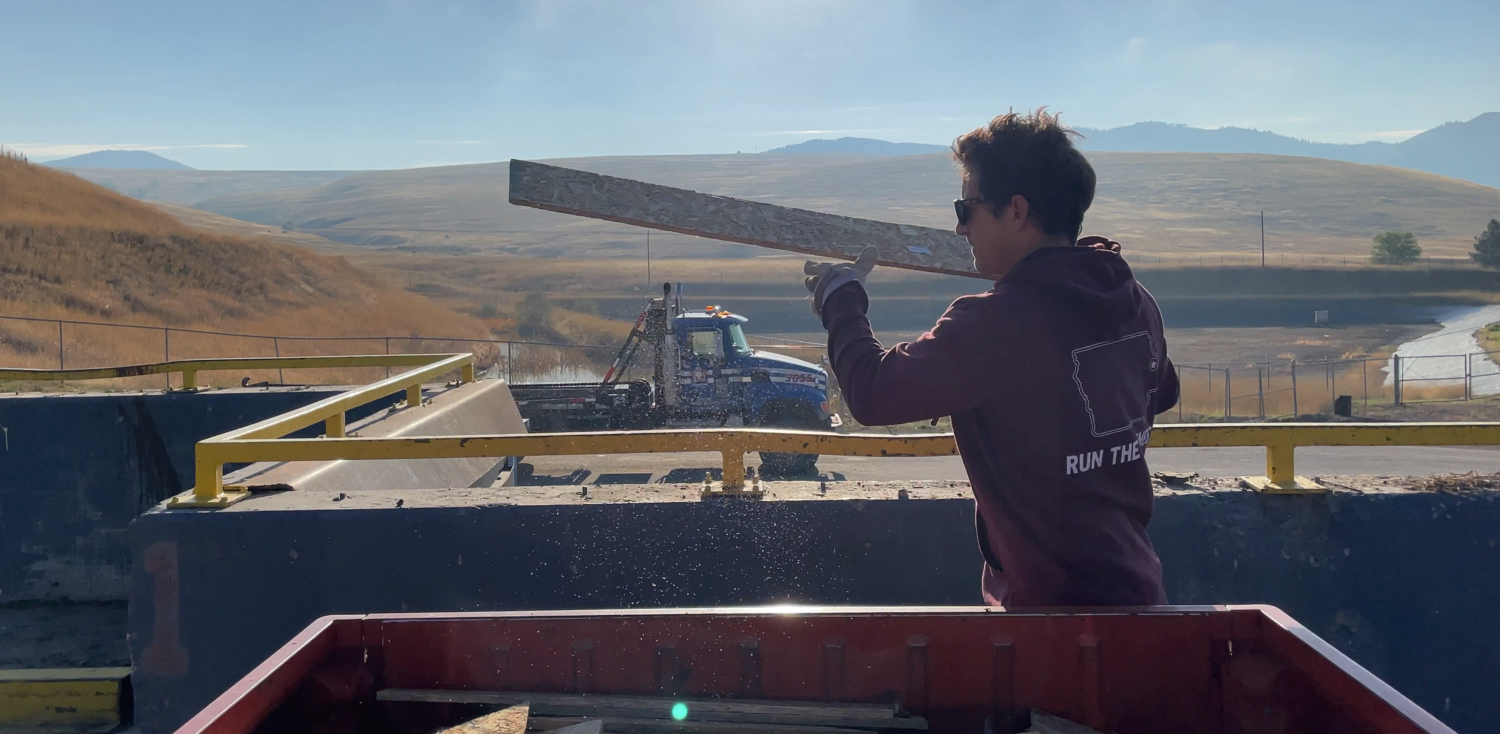
At the drive-up window, they weigh your vehicle, and you have to tell them what you have in your truck. This time, it was some old plywood, some chunks of foamboard insulation, small pieces of roofing tin, and other junk that our building materials reuse store wouldn’t take. And then I asked, “You get seagulls here a lot?”
“Every spring.”
I would later learn that they weren’t technically seagulls—or more accurately, nothing is technically a seagull. There are just gulls, many species of them, and these were most likely ring-billed gulls, which are commonly called seagulls when they’re near, ahem, the sea. Which our dump in Missoula is not.
--
There’s a part in the film Come See Me In The Good Light when the late poet Andrea Gibson’s ex, Bethy, picks them up to go to the dump. Bethy asks Andrea about the videographer and film crew (who are riding in the back seat of the truck), saying, “Do they know we know each other? Or do they think I’m an Uber dump driver?” to which Andrea replies,
“They know you’re my ex from long ago and they know now you’re one of my best friends.”
They finish driving to the dump, throw some trash out from the back of Bethy’s truck, and in the pile of discarded stuff at the dump, they find a pair of wooden deck chairs, which Andrea wants to take home. Over this footage is Andrea’s wife, Megan, saying,
"There's a line in one of Andrea's poems which is: so many queer people are friends with their exes because they've lost so much family that when they find people they call family they will do anything they can to not let them go."
--
The dump is not its real name—it’s technically a “landfill,” which is what they do with the stuff that gets delivered there: they fill in the land with it. But I call it the dump because that’s what I do when I’m there: I dump stuff.
I try to not go to the dump, because it’s expensive, as is pointed out by Google reviewers who have taken the time to review the dump and rate it one star out of five. I am not sure if it’s expensive compared to other dumps, but I know there is a certain feeling attached to paying to get rid of something that I already paid for in the past.
But mostly, I don’t love going to the dump because I feel like I failed a little bit when I have not managed to recycle, reuse, or donate large pieces of stuff. There’s just something defeating about backing your truck up to a giant pile of cast-off material and adding your shit to it. Or maybe I mean defeated. Like, I have tried, I couldn’t figure out what else to do with it, so here, please get it out of my sight.
But one day, driving back down with an empty truck bed, watching a couple employees pick up bits of trash that had blown off the big pile Up Top, it occurred to me that I actually wanted to take my kid to the dump someday. I have been so excited to share with him some of the things I love, like bicycles and ice cream cones and Andrew Bird songs, which are things humans have made. The dump is something we’ve made too.
--
“Up top” is what they call the giant pile I back my truck up to at the dump, a cutout of the earth visible on satellite maps (and from the top of Mt. Sentinel), seated a couple hundred feet above Missoula. You drive around on the dirt road that curves up to the top, get to the pile of garbage, then back in your truck or trailer and start chucking. You have to wear a hi-vis vest when you’re Up Top because there’s always a dump employee operating an earth mover up there, pushing and massaging the ever-expanding pile. If you don’t have a hi-vis vest with you when you enter the dump, they require you to buy one for $2.
A $2 hi-vis vest, of course, is probably just one more piece of garbage for most people who have to buy one on their visit to the dump—like you’re not hanging onto a disposable fork you got from a takeout order from a restaurant. I am aware of this irony. Although one time when I was at the entrance station and the employee asked the question, “Have you been Up Top before?” and then “Do you have a hi-vis vest?” and the word “No” was about to come out of my mouth when I leaned over and checked the glove box of my truck and found the $2 hi-vis vest I’d purchased on my last visit more than a year ago. HAHA! No thanks, I brought my own fork. From last time.
--
The people at the entrance station decide your fate: They either send you Up Top, with your $2 hi-vis vest, to the big, kinda sad pile, or they send you to a set of five dumpsters a couple hundred feet from the entrance. When it is my lucky day, the entrance person sends me and my tiny 1979 pickup containing a barely noticeable amount of trash to the dumpsters. I back up, huck my stuff over the railing into a dumpster, and am on my way.
One time, a summer Monday morning if I remember correctly, I backed in next to a truck, and a lady was sitting behind the steering wheel just finishing up something on her phone before she stepped out to unload her stuff. I had begun heaving my junk already when I heard her say something to me. I stopped throwing things and looked up.
“Does everything go in here?” she asked as she gestured to the dumpsters.
“Yep,” I said.
I was caught a bit off-guard by the question, though, because the dump, to me, is where you go when you run out of options. There’s no sorting, no reuse, just packing all this stuff into the earth, which will, given enough time, turn into earth again. To be fair, though, there are five giant dumpsters there, so I could see where someone might think they would indicate five different destinies for the items tossed into them. But in fact, no. It’s all landfill. The end of the line.
--
There are multiple companies in our town that will demolish an old building, and only a few companies that will “deconstruct” a building—recycling whatever can still be reused, and reducing waste. I have watched a couple of them tear down a building near my regular bike ride and running routes, over a few days or a week watching the neatly piled stacks of old wood grow as an old building gradually disappears.
I have also watched across the alley from our backyard as a guy operating an excavator crushed a 30-foot by 20-foot garage into the dirt in one day, scooping all the broken bits into a huge dumpster, all that old, dense wood in its frame and sheathing splintered and smashed, headed to that big pile in the dump.
I think about that building and all the wood that went into that dumpster almost every time I sight 2 x 4s at the lumberyard or home improvement store, and I have to pick 12 or 15 of them out of the pile just to find a few that are straight. How much good wood is sitting in the dump.
--
The actual line Andrea Gibson wrote about not letting people go is in the poem "First Love":
My straight friends tease me
because all my best friends
are my ex loves,
but a wise heart told me
it’s the most tender part
of queerness—how we’ve all lost
so much family when we find people
we call family, we’ll do almost anything
to not let go.
In Come See Me in the Good Light, the discussion about all this, about keeping people in their life even after the romantic part of the relationship was over, comes directly after footage of Andrea looking out the window at the dump and saying, "Somebody just threw that chair away? That's actually a good chair."
--
I don’t know when Jay will be old enough to understand what I’m trying to convey to him by taking him to the dump and seeing what it’s like there, the mass of cast-off junk for our one not-so-huge county, the things we decided we had no more use for. I don’t know what I’d say, if I’d need to explain anything, or just ask him to help me toss this old warped door over there, or these odd-shaped bits of metal roofing, these rotted fence posts, our contributions to the pile.
Matter can neither be created nor destroyed, I could say to him, or more simply, nothing ever really goes away, even if it’s out of your sight.
--
If you enjoyed this piece, please consider supporting my work.
Semi-Rad
Writer, artist, filmmaker, columnist for Outside Magazine. My newsletter about creativity, adventure, and enthusiasm goes out to 15,000+ subscribers every week.

Friday Inspiration 545 I don’t know how to describe this 8-minute video of the Artemis II launch, but it was unexpectedly moving (I know Katy Perry/lots of ultra-rich people have now gone to space but why is this so much more exciting?)(video) This is a story about the minor-league Staten Island FerryHawks being the worst team in professional baseball this season, but the best part to me was Lauren Theisen’s description of what it was like to watch a night game in a stadium designed to hold...

Friday Inspiration 544 Clips of this performance were floating around social media this week, especially noting that Robert Glasper has tears running down under his sunglasses while he plays a cover of Radiohead’s “Everything in Its Right Place,” and it is incredibly powerful. But I poked around a bit and he’s been covering this song for at least 20 years, so I wonder why this performance affected him so much? (video) This New York Times article about Sylvester Stallone’s Cliffhanger being a...
Life Stage: Big Tent Sometime between 3 a.m. and 4 a.m. last Wednesday night, I got kicked in the head. I jolted awake, not sure what was happening for a few seconds, then realized it was my 3-foot 6-inch tall preschooler’s feet in my face. I was trying to sleep against the wall of the biggest tent I’ve ever owned, and finding it a little cramped because my child, who was sleeping between myself and my wife, had worked himself into a position exactly perpendicular to us: I gently turned him...